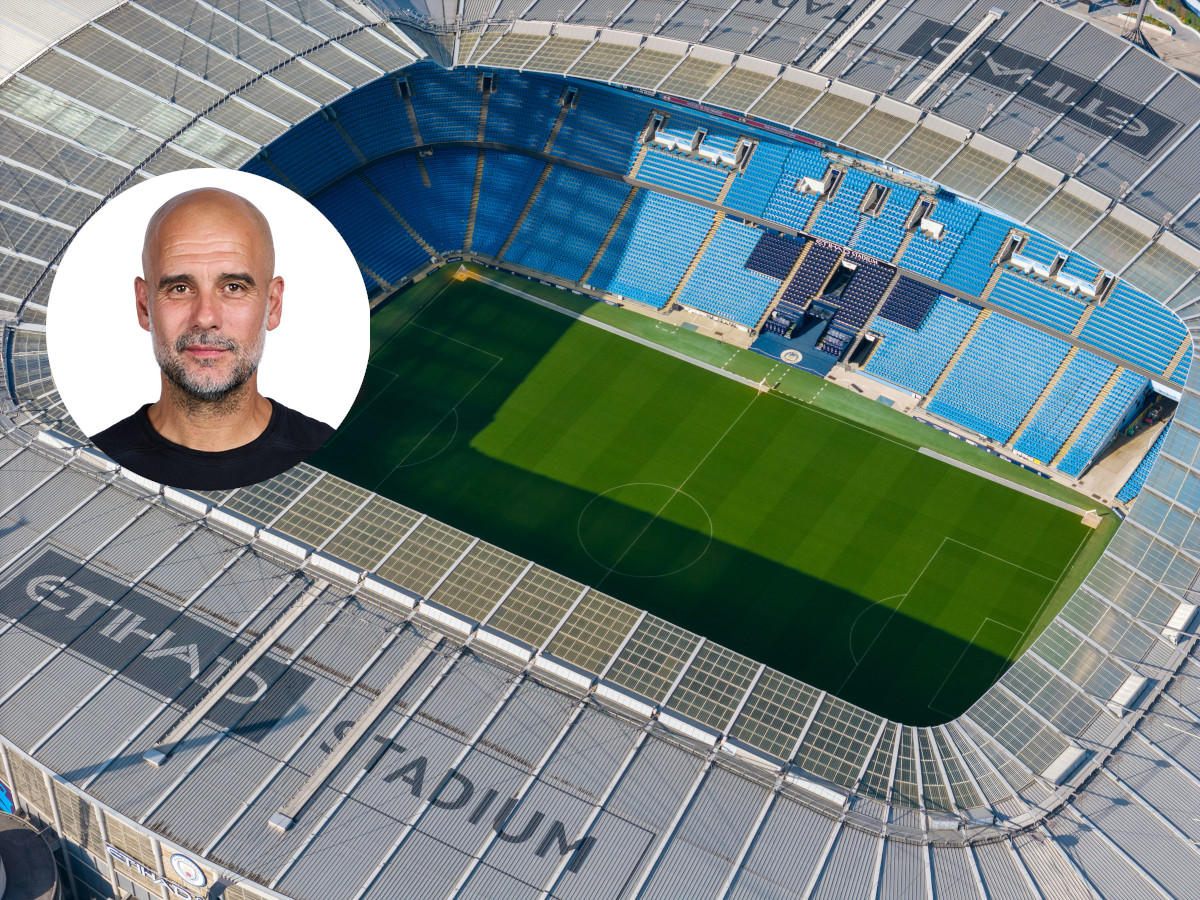
Pep Guardiola’s Manchester City reign will be remembered as one of the most dominant managerial eras in English football. City have confirmed Guardiola will step down this summer, ending a decade in which he became the most successful manager in the club’s history with 20 major trophies. (mancity.com)
But even the best-run football projects make mistakes. Guardiola’s City got more right than wrong in the market, but not every signing became Rodri, Rúben Dias, Ederson, Bernardo Silva or Erling Haaland. Some arrived with big reputations, some with tactical logic, and some with obvious upside — only to become reminders that talent alone is not enough in Guardiola’s system.
These are the seven biggest transfer misses of the Pep Guardiola era at Manchester City.
7. Nolito
Nolito was one of Guardiola’s first City signings, and on paper the move made sense. He was experienced, technically sharp, Spanish, familiar with positional football and had worked under Guardiola at Barcelona. But the deal never really settled.
City sold him to Sevilla after just one season. The club’s own announcement said he made 30 appearances and scored six goals, while BBC Sport noted that he did not start a Premier League match or score a goal in 2017. (mancity.com)
The problem was not that Nolito lacked ability. The problem was that he looked like a short-term fix in a team that was about to move into a new gear. Once Leroy Sané, Raheem Sterling, Gabriel Jesus and later Bernardo Silva became central to City’s attack, Nolito felt like a signing from a transitional moment rather than a player for the dynasty Guardiola eventually built.
Better fit: a younger, faster wide forward with more Premier League upside and resale value.
6. Angeliño
Angeliño is an interesting miss because he became a good player — just not for Guardiola’s City. He returned from PSV in 2019, but City’s own website later noted that he had played only 12 times after rejoining before heading back to RB Leipzig on loan. (mancity.com)
At Leipzig, Angeliño looked far more natural as an aggressive wing-back, with freedom to attack early and often. At City, he was being judged in a very different full-back environment: tighter positioning, more security in build-up, and far more responsibility against counterattacks.
This was a tactical mismatch. Angeliño had the left foot and attacking instinct, but not the all-round defensive and positional profile Guardiola needed.
Better fit: a left-sided defender who could invert into midfield or play as a third centre-back in possession.
5. Sergio Gómez
Sergio Gómez was another left-back solution that never really solved the left-back problem. He arrived from Anderlecht in 2022 but left for Real Sociedad two years later. City said he made 38 appearances and helped the club win six trophies; BBC Sport added that he made only 18 Premier League appearances after arriving for around £11m. (mancity.com)
Gómez was neat technically, but he never looked physically or defensively dominant enough to become a trusted Guardiola full-back. In a team where defenders are often asked to play like midfielders and recover like sprinters, he remained a squad option rather than a serious answer.
This was not a catastrophic transfer, but it was still a miss because City were looking for a specialist solution and ended up with a peripheral player.
Better fit: a stronger one-v-one defender with the technical level to step into midfield.
4. Matheus Nunes
Matheus Nunes may still have a career after Guardiola, but under Pep this has to be classed as a miss. City agreed a deal worth around €55m with Wolves in 2023, a major fee for a midfielder who was supposed to bring carrying power, athleticism and depth after Ilkay Gündogan’s departure. (theguardian.com)
The issue is that Nunes never truly became a Guardiola midfielder. That point became even clearer when Guardiola publicly suggested his future was more likely at right-back than in midfield, saying he lacked the composure for that central role. (tntsports.co.uk)
That is damaging because City did not pay that money for an emergency full-back. They paid it for a player who could live in the middle of the pitch, receive under pressure, control tempo and make the right decision again and again. Nunes has qualities, but they have not added up to the midfielder City thought they were buying.
Better fit: a true tempo-controlling No. 8, closer to Gündoğan or Mateo Kovačić than a transition ball-carrier.
3. Claudio Bravo
Claudio Bravo was Guardiola’s first big symbolic call at City. Joe Hart was moved aside, and Bravo arrived because Guardiola wanted a goalkeeper who could build from the back. The theory was clear. The execution was not.
City later described Bravo as a player signed to fit Guardiola’s “playing from the back” strategy, and said he made 30 appearances in his first season. But that first campaign was shaky, and The Guardian later wrote that City had “suffered for the wrong choice of goalkeeper” before Ederson arrived in 2017. (mancity.com)
Bravo did have better moments later as a cup goalkeeper, so his City career was not worthless. But as the man chosen to launch Guardiola’s goalkeeping revolution in England, he failed. Ederson’s arrival one year later showed exactly what City had been missing.
Better fit: Ederson — or an Ederson-type keeper — from the start.
2. Benjamin Mendy
Benjamin Mendy should have been one of the defining signings of Guardiola’s second City season. He arrived from Monaco for £52m, then a world-record fee for a defender, after starring in one of Europe’s most exciting young teams. (theguardian.com)
For a brief moment, the idea made perfect sense. Mendy had pace, power, crossing ability and the profile to stretch the pitch from left-back. But the transfer quickly unravelled on football terms. City confirmed in September 2017 that he had ruptured the anterior cruciate ligament in his right knee, and injuries badly disrupted his rhythm. (mancity.com)
Mendy’s later off-field legal situation also overshadowed the end of his time at the club; he was cleared of a series of charges and left City at the end of his contract in 2023. (bbc.co.uk)
Strictly as a football transfer, it was a huge miss. City spent elite money on a player who was supposed to lock down left-back for years, but Guardiola spent much of the era using midfielders, centre-backs or makeshift solutions in that position.
Better fit: a more durable, positionally disciplined left-back who could become part of City’s build-up structure.
1. Kalvin Phillips
Kalvin Phillips is the clearest miss of the Guardiola era. The logic of the transfer was obvious: an England international, Premier League-proven, physically strong, tactically educated by Marcelo Bielsa and available to give Rodri cover.
But the reality was brutal. City signed Phillips from Leeds in 2022 for £45m on a six-year deal. By February 2026, BBC Sport reported that he had fallen out of favour, had made only one brief City appearance that season, and had gone on loan to Sheffield United after previous loan spells away. (bbc.co.uk)
The biggest problem was trust. Guardiola never seemed convinced Phillips could play as the single pivot in City’s most important games. And once that became clear, the transfer lost its purpose. A backup to Rodri has to be trusted when Rodri is absent. Phillips was not.
This is why he ranks above Mendy, Bravo and Nunes. City did not just sign a player who struggled. They signed a player for a very specific role and then almost never used him in that role when it mattered.
Better fit: a press-resistant No. 6 with stronger positional control, quicker passing rhythm and more comfort receiving under pressure.
Final verdict
The common thread is not simply “bad players.” Most of these players had talent. Some had strong careers elsewhere. The problem was fit.
Guardiola’s City demanded extreme technical security, tactical intelligence, physical durability and emotional resilience. The best signings — Rodri, Bernardo, Ederson, Dias, Walker, Gündoğan — did not just have quality. They understood the machine.
The misses failed for different reasons. Phillips lacked trust. Mendy lacked availability. Bravo lacked authority. Nunes lacked the midfield control Guardiola wanted. Gómez and Angeliño lacked the defensive profile City needed. Nolito arrived at the wrong moment.
That is the lesson of Guardiola’s transfer era: at Manchester City, being good was never enough. You had to be good in exactly the right way.


